Sourcing
We work with traditional palm oil producers in Ghana’s palm belt and accept only oil that meets our standard for colour, aroma and consistency.
Quality & process
Anyone can call their oil pure. What matters is what happens between the palm fruit and the sealed sachet.
“We conform to strict quality control and food safety standards at every stage, ensuring our red palm oil remains 100% natural, hygienic, and free from dangerous additives or adulterants.”
Our process
Five stages, each with a check that has to pass before the oil moves forward.
We work with traditional palm oil producers in Ghana’s palm belt and accept only oil that meets our standard for colour, aroma and consistency.
Every batch is examined before it is accepted. Oil showing signs of adulteration, dilution or added colouring is rejected outright.
The oil is settled and strained to remove sediment and residue — physical cleaning only. Nothing is bleached, deodorised or chemically treated.
Filling happens in clean, controlled conditions with equipment and surfaces sanitised between runs, so nothing is introduced to the oil at the last step.
Each sachet is heat-sealed and checked for a complete seal before it is packed for distribution. A sachet that fails does not leave.
Why unrefined
The deep red of palm oil comes from carotenoids that occur naturally in the palm fruit. It is the clearest visible sign that the oil has been left alone.
Industrial refining bleaches and deodorises palm oil, which strips out that colour along with much of what came with it. The result keeps longer and looks uniform on a shelf, but it is no longer the ingredient Ghanaian cooking was built around.
Zani is unrefined. We clean the oil physically, and that is all. What stays behind is the colour, the aroma, and a natural nutrient profile that includes Beta-Carotene and Vitamin E.
The compound behind the red colour, naturally present in unrefined red palm oil.
Occurs naturally in the oil and is retained because we do not refine or deodorise it.
The traditional smell and taste that tells you the oil is the real thing.
No colourings, preservatives, thinning agents or blended oils.
Food safety
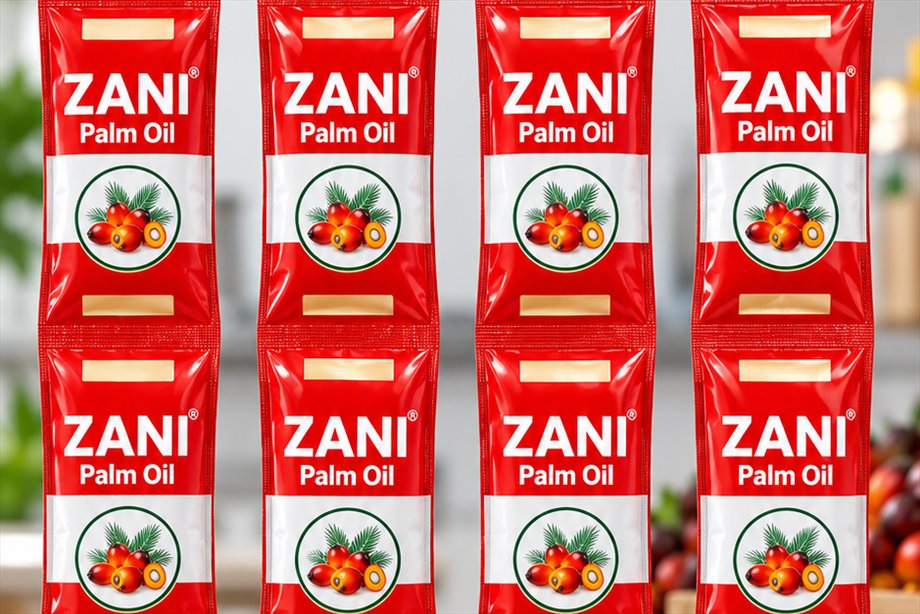
Hygiene is where most of the risk in traditional palm oil sits — not in the oil itself, but in how it is handled, stored and sold. Our packaging process is built to remove that risk.
For buyers
Adulterated palm oil is a real problem in the market. These are the signs worth knowing — whichever brand you buy.
Genuine unrefined oil is a deep, natural red. An unnaturally bright or orange-tinted red often means dye.
Real red palm oil has a distinct traditional aroma. Oil that smells of nothing has usually been refined or cut.
Natural thickening in cool conditions is normal and clears with gentle warmth. Oil that never changes may be blended.
Buy sealed. Oil sold from open containers has been exposed to whatever was around it.
A named producer and a contactable address mean somebody is answerable for what is inside.
A producer confident in their oil will answer them. Ours are on the contact page.
We are happy to talk through our process with retailers, distributors and customers alike.